Situation
Anxiety at work: things you can do without anyone noticing
Work anxiety is mostly a logistics problem: you need something that takes ninety seconds, is invisible to the people around you, and does not require leaving the room. This page covers silent paced breathing, quick grounding before a meeting, and the end-of-week and Sunday-night versions.
Last reviewed:
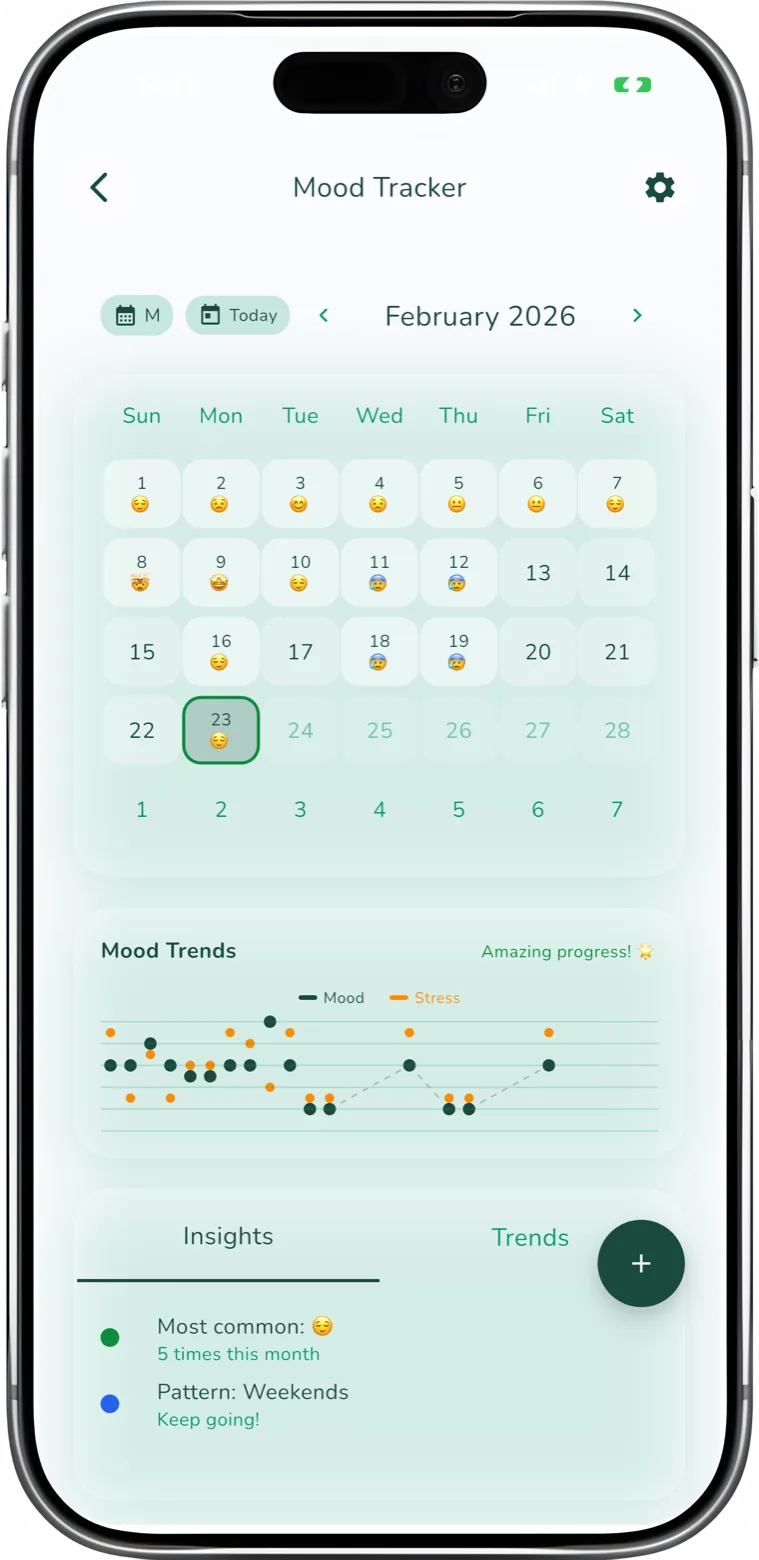
Mood check-ins in seconds
Pick how you feel, add a note if you like, and relif keeps the entries together so patterns are easier to notice.
At the desk, invisibly
- Silent paced breathing. Nasal inhale, longer exhale, nothing visible. Coherent breathing — five seconds in, five out — is the least conspicuous pattern because there is no hold and no gasp. relif’s breathing exercise vibrates at each phase change, so you can leave the phone face-down on the desk and follow the pulses without looking at a screen. It is free, unlimited and works offline.
- Feet and chair. Press both feet into the floor and notice the chair against your back. It is the smallest possible grounding move and nobody can see it.
- Name three things on your screen. Silent 5-4-3-2-1, abbreviated. The point is competing with the loop, not completing the list.
- Cold water on the wrists on the way back from a break — a physical input change that does not need explaining.
Before a meeting or a presentation
Two minutes of exhale-weighted breathing beforehand is more useful than two minutes of rehearsing the worst line. Pick one concrete thing inside your control — “ask one clarifying question”, “get through slide four” — rather than an outcome like “seem competent”. And write down the specific prediction you are dreading, because a specific prediction can be checked afterwards. The social-situations page covers the before-during-after pattern in more detail.
The shutdown, and Sunday night
Work anxiety is often not about the work hours at all. Two common patterns:
- The unfinished-list problem. A short end-of-day dump — everything open, plus the single next action for each — moves the list out of the part of your brain that keeps rehearsing it. relif’s free-flow journal auto-saves as you type, which is enough structure for this.
- Sunday-night dread. Usually anticipation rather than the week itself. Naming the specific thing you are dreading — one meeting, one conversation, one deadline — often shrinks “the whole week” back down to a manageable size.
Where techniques stop being the answer
A breathing exercise does not fix an unmanageable workload, an unclear brief, a hostile manager or a job that is wrong for you. Techniques help you function while a situation is what it is; they are not a substitute for changing the situation, and framing a structural problem as a personal regulation failure is its own harm. Treat persistent work anxiety as information about the job as well as about you.
The NIH also notes that relaxation techniques, while generally safe, occasionally increase anxiety in some people. If focusing on your breathing at your desk makes you more agitated, switch to something external — counting objects, listening for specific sounds.
When to get help
Talk to a doctor or a mental-health professional if work anxiety is persistent, if it is affecting your sleep most nights, if you are avoiding tasks or meetings because of it, if you are using alcohol to wind down, or if it has spread beyond work. Many employers offer confidential support programmes; where they exist, they are usually faster to access than anything else. relif is a wellness app and does not treat anxiety.
What relif has for the working day
- Guided breathing — unlimited on every tier, offline, paced by vibration so it works with the screen face-down.
- Short grounding and affirmation techniques from the 20+ relief techniques; three a day on a free account.
- Mood and stress check-ins — a few seconds each, and over weeks they show whether the pattern is Tuesdays, or every day.
- Liam — an AI companion, not a therapist and not a coach. Five messages a day on a free account.
Common questions
What can I do in the two minutes before a meeting?
Slow, exhale-weighted breathing, and picking one concrete action inside your control instead of an outcome. Both are free, and neither requires leaving the room.
How do I stop thinking about work at night?
A written end-of-day dump with next actions, and a wind-down that is not a bright screen. If it has become a nightly pattern, the night-anxiety page goes into what to do at 3am.
Is Sunday-night dread normal?
It is extremely common. It is also worth taking seriously as information: if every Sunday is bad, the question may be about the job rather than about your coping skills.
Can I use relif discreetly at work?
Yes. Breathing runs with the phone face-down using vibration for pacing, works offline, and needs neither an account nor a subscription.
Keep reading
Get relif free
Free to download on iOS and Android


Wellness Disclaimer: relif is a wellness and self-care companion designed to support your emotional wellbeing. It is not a medical device, does not provide medical advice, and is not a substitute for professional healthcare, therapy, or counseling. If you are experiencing a medical or mental health emergency, please contact your local emergency services or a crisis helpline immediately.
Editorial policy: Written by the relif team from primary sources — the product itself, store listings and peer-reviewed or official publications. Not medical advice. Read our editorial policy and sources.
Sources
- Relaxation Techniques: What You Need To Know — National Center for Complementary and Integrative Health (NIH) (2026)
- Anxiety Disorders — National Institute of Mental Health (NIH) (2026)