Situation
Anxiety at night: what people do at 3am
Worry gets louder at night: nothing competes for your attention, nothing can be acted on, and being awake becomes its own second problem. This page covers the wind-down people use before bed, what to do when you wake at 3am, and when persistent sleeplessness is worth taking to a doctor.
Last reviewed:
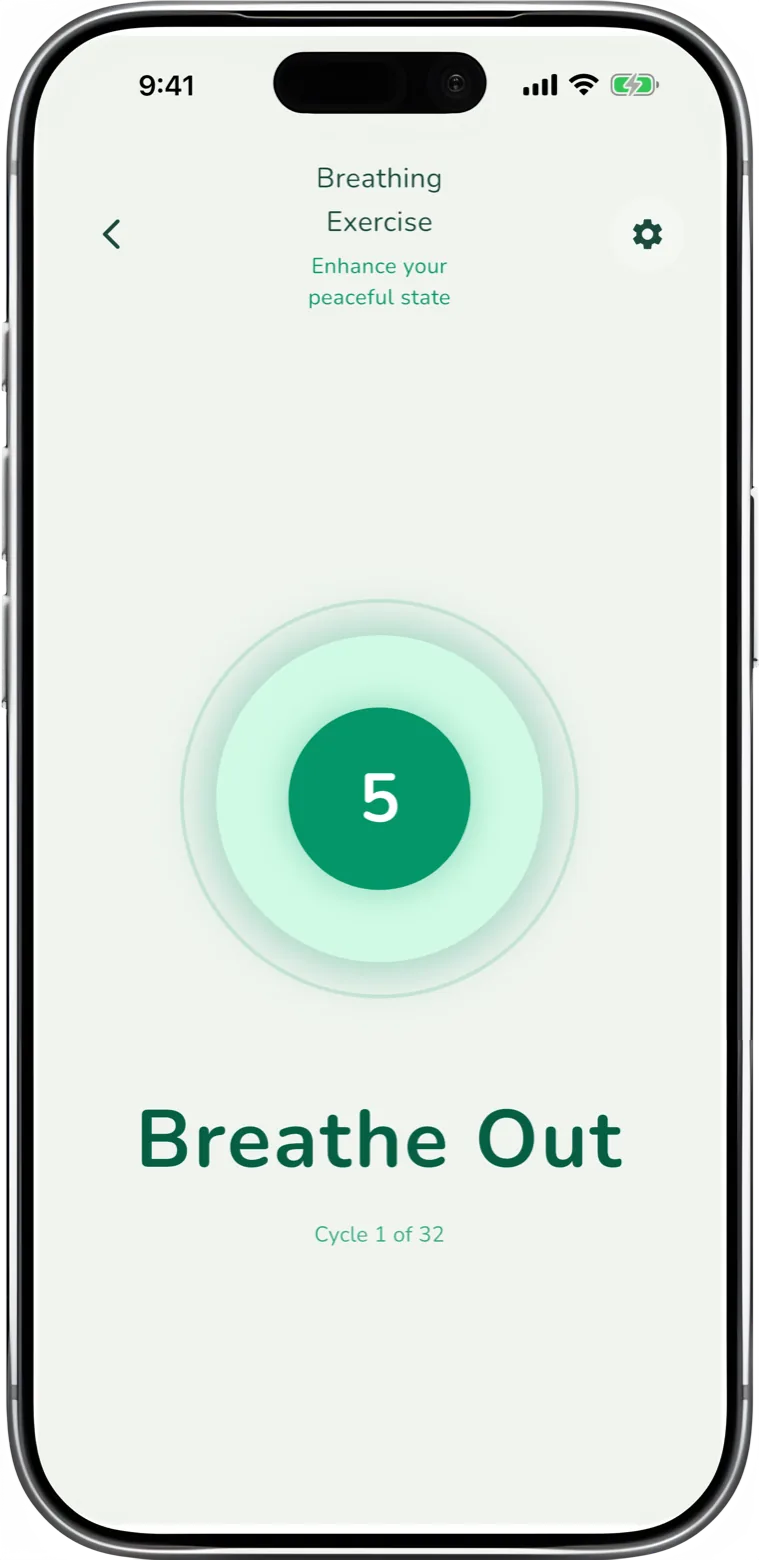
Guided breathing, one count at a time
A single expanding circle paces each inhale, hold and exhale, so you can follow along without reading anything.
Why it is worse at night
Three things stack up. There is nothing else to attend to, so a worry that would be background noise at 2pm is the only thing in the room at 2am. Nothing can be done — you cannot send the email or make the call — so the thought loops instead of resolving. And being awake becomes a second worry layered on the first: calculating how many hours are left, and how bad tomorrow will be.
Waking in the early hours is also normal sleep architecture. Most people surface briefly several times a night and do not remember it. Anxiety turns a brief surfacing into a full wake-up, because the moment you check whether you are asleep, you are not.
Before bed
- Put the worry somewhere. A short written dump — everything on your mind, plus the single next action for anything actionable — moves the list out of the part of your brain that is trying to hold it. relif’s free-flow journal is built for exactly this: no prompts required, auto-saved as you type.
- Slow the breath while you are still calm. Coherent breathing (5 in, 5 out) or 4-7-8 for a few minutes is easier to start before you need it than after.
- Keep the phone dim and boring. Reading the news on a bright screen is not a wind-down. If you use an app, use one that does one thing and closes.
When you wake at 3am
- Do not calculate. Working out how many hours are left is the most reliable way to guarantee you stay awake. If you can, turn the clock away.
- Longer exhale than inhale. Try 4 in, 8 out, or the double-inhale-long-exhale pattern. In a 2023 randomised study in Cell Reports Medicine, five minutes a day of cyclic sighing over 28 days improved mood and lowered respiratory rate more than mindfulness meditation did. That was daily daytime practice, not a 3am intervention — but it is why the pattern is the one people reach for.
- Follow it without a screen. relif’s breathing exercise vibrates at each phase change, so you can run it face-down in the dark. It works offline and is unlimited free.
- Get out of bed if 20 minutes pass. Standard sleep advice, and it is about association: lying awake and frustrated in bed teaches your brain that bed is where you lie awake and are frustrated. Somewhere dim, something dull, go back when you are sleepy.
- Name it once, then release it. Naming the worry — in a note, or in relif’s Thought Release, where you type it and watch it dissolve in one of five animations — gives the loop an ending. Do it once. Do not start an inventory at 3am.
One caution
The NIH notes that relaxation techniques are “generally considered safe for healthy people”, but that a small number of people experience increased anxiety or intrusive thoughts, and that caution applies for people with epilepsy, certain psychiatric conditions or a history of trauma. At night specifically: if focusing on your breathing makes you more aware of your heartbeat and more alarmed, switch to something external — counting sounds, naming objects — instead.
When to see a doctor
Talk to a doctor if you have had trouble sleeping most nights for a month or more, if you are exhausted during the day, if you are using alcohol or medication to get to sleep, or if night-time worry is part of a broader anxiety that is affecting your life. Insomnia has well-established treatments, and persistent anxiety has effective ones. relif is a wellness app: it does not diagnose or treat sleep disorders and makes no claim to.
What relif has for the night
- Guided breathing that works offline and in the dark — four presets including 4-7-8 and coherent breathing, custom patterns, haptic pacing. Unlimited on every tier.
- Journals for the worry dump — free flow and gratitude, with prompts if a blank page is harder than a question.
- Thought Release — name it, watch it dissolve. Three a day on a free account. The ritual works offline, though the thought will not reach the shared garden until you reconnect.
- Liam — an AI companion, not a therapist. It needs a connection, and it is not a crisis service.
relif has no sleep-story or sleep-music library. If that is what you want at night, a meditation app such as Calm is the better tool — see the comparison.
Common questions
Why do I wake up at 3am with anxiety?
Brief awakenings during the night are normal. Anxiety turns one into a full wake-up because attention has nothing else to do and nothing can be acted on, so the thought loops. Persistent early-morning waking is worth mentioning to a doctor.
What breathing pattern is best for sleep?
People most often use patterns where the exhale is longer than the inhale — 4-7-8, or 4 in and 8 out. Coherent 5-5 breathing is a gentler starting point if long holds feel uncomfortable.
Should I get out of bed if I cannot sleep?
Standard sleep advice says yes, after about twenty minutes: go somewhere dim, do something undemanding, return when you feel sleepy. It is about protecting the association between bed and sleep.
Does relif have sleep sounds?
No. relif has breathing, grounding, journaling and calming sound techniques, but no sleep-story or sleep-music library, and we do not advertise one.
Keep reading
- Guided breathing in relif4-7-8 and coherent breathing, paced by vibration in the dark.
- Guided journalingA worry dump before bed: three journal types and their prompts.
- Panic attacks: what people do in the momentIf waking up tips into a full panic episode.
- The evidence behind the techniquesWhat the paced-breathing research does and does not show.
Get relif free
Free to download on iOS and Android


Wellness Disclaimer: relif is a wellness and self-care companion designed to support your emotional wellbeing. It is not a medical device, does not provide medical advice, and is not a substitute for professional healthcare, therapy, or counseling. If you are experiencing a medical or mental health emergency, please contact your local emergency services or a crisis helpline immediately.
Editorial policy: Written by the relif team from primary sources — the product itself, store listings and peer-reviewed or official publications. Not medical advice. Read our editorial policy and sources.
Sources
- Brief structured respiration practices enhance mood and reduce physiological arousal — Cell Reports Medicine (Balban et al.) (2023)
- Relaxation Techniques: What You Need To Know — National Center for Complementary and Integrative Health (NIH) (2026)
- Anxiety Disorders — National Institute of Mental Health (NIH) (2026)