Situation
Panic attacks: techniques people use in the moment
A panic attack is a surge of intense fear with physical symptoms — racing heart, breathlessness, shaking — that usually peaks within about ten minutes. This page describes what people commonly do in that moment: slow exhales, sensory grounding, and waiting it out safely. It is information, not treatment.
Last reviewed:
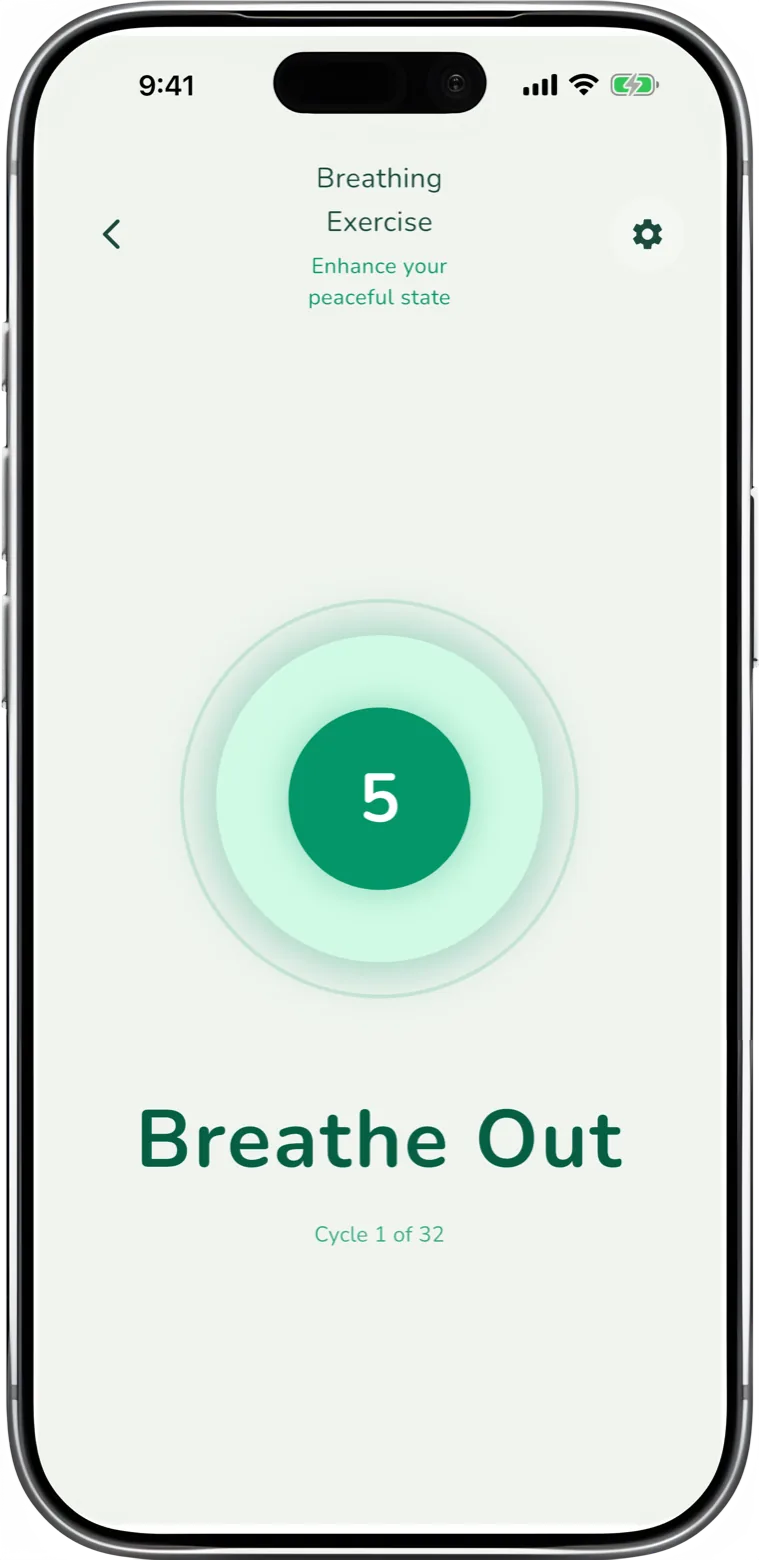
Guided breathing, one count at a time
A single expanding circle paces each inhale, hold and exhale, so you can follow along without reading anything.
What a panic attack is
A panic attack is a sudden episode of intense fear accompanied by strong physical sensations: a pounding or racing heart, shortness of breath, chest tightness, sweating, trembling, nausea, dizziness, tingling in the hands or face, and often a sense of unreality or of losing control. It typically builds fast and peaks within minutes rather than hours.
The sensations are real, and they are frightening precisely because they feel dangerous. The National Institute of Mental Health lists panic disorder among the main anxiety disorders, and notes that with anxiety disorders the anxiety “does not go away, is felt in many situations, and can get worse over time”. Having a panic attack does not by itself mean you have panic disorder — a lot of people have one or two after a period of stress and never have another.
If you think it might be your heart, treat it as your heart
Panic and cardiac events share symptoms, and no app, article or checklist can tell them apart. If you have chest pain, pain spreading to your arm, jaw or back, severe breathlessness, or symptoms that are new, different or worsening, call your local emergency number. Getting checked and being told it was panic is a good outcome. This page cannot and does not diagnose anything.
What people commonly do in the moment
None of the following stops a panic attack on command, and anyone promising that is selling something. What they do is give you something concrete to do with your attention and your breath while the surge passes.
Make the exhale longer than the inhale
Slow, exhale-weighted breathing is the most studied thing on this list. In a randomised study published in Cell Reports Medicine in 2023, 108 participants practised five minutes of daily breathwork or mindfulness meditation for 28 days; the cyclic sighing group — a double inhale through the nose followed by a long, slow exhale — showed greater mood improvement and a significantly larger reduction in respiratory rate than the meditation group. That was daily practice in healthy volunteers, not an in-the-moment panic study, but it is the reason the physiological sigh keeps appearing in this context.
Practically: inhale through the nose, take a second short sip of air on top, then let a long exhale out through the mouth. Repeat a few times. If counting helps, try 4 in, 8 out, or a 4-7-8 pattern. Do not force a breath hold if it makes you feel worse.
Give your senses something to count
The 5-4-3-2-1 exercise moves attention outward: name five things you can see, four you can hear, three you can touch, two you can smell and one you can taste. Counting backwards from a hundred in sevens, or doing simple mental arithmetic, does a similar job. The point is not the content of the list; it is that naming things takes attention away from monitoring your own heartbeat.
Change the physical input
Cold water on the wrists or face, stepping outside, standing up, or holding something textured are all common and low-risk. The NIH’s complementary health centre notes that relaxation techniques are “generally considered safe for healthy people”, while flagging rare cases of increased anxiety or intrusive thoughts — so if a technique makes things worse, stop and try a different one.
Name what is happening
Saying to yourself “this is a panic attack, it peaks and it passes” is a small cognitive move with a long history in cognitive behavioural approaches. It does not remove the sensations. It changes what you conclude about them, which is often what keeps the loop spinning.
What tends to make it worse
- Fighting it. Trying to force the feeling to stop tends to add a second layer of alarm on top of the first.
- Checking your pulse repeatedly. Body-scanning for danger feeds the exact loop you want to interrupt.
- Fast, shallow chest breathing. Over-breathing produces the tingling and light-headedness that then read as evidence something is badly wrong.
- Escaping every time. Leaving immediately brings relief now and often makes the place feel more dangerous next time — a pattern therapists work on directly.
Afterwards
People often feel wrung out for hours. Eating something, drinking water, and writing down what happened while it is fresh — where you were, what you noticed first, what you tried — is more useful than trying to analyse it in the moment. relif’s mood check-in records mood on a 1–5 scale and stress on 1–10 with a note, which is a low-effort way to build that record.
When to talk to a professional
Consider speaking to a doctor or a mental-health professional if panic attacks recur, if you have started avoiding places or situations because of them, if you are worrying between episodes about the next one, or if they are affecting your work, sleep or relationships. Cognitive behavioural therapy has strong evidence for anxiety disorders, and effective treatment exists. An app is not a substitute for it.
What relif has for these moments
relif is a free wellness app for iOS 15 and later and Android 8.0 and later, in eight languages. It does not treat panic disorder and makes no claim to. What it offers for an anxious moment is:
- A guided breathing exercise with four presets — 4-7-8, box, quick calm and coherent breathing — plus custom patterns, an animated pacer and vibration synced to each phase. It works offline and is unlimited on every tier, including without an account.
- 20+ guided relief techniques including 5-4-3-2-1 grounding, counted breathing and mental arithmetic. Three a day on a free account; these need a connection.
- Liam, an AI companion — an AI, not a therapist — that can talk you toward an exercise. Two messages without an account, five a day on a free one.
- Always-on crisis detection routing to verified helplines by country, on every tier, described on the crisis support page.
Common questions about panic attacks
How long does a panic attack last?
Most peak within about ten minutes and subside over the following half hour, though people often feel drained for much longer. If symptoms persist, escalate, or are unlike anything you have had before, get medical help rather than waiting it out.
Can a panic attack hurt you?
Panic attacks are frightening, and the sensations are genuinely unpleasant, but the episode itself is not dangerous in the way it feels. That said, only a clinician can tell you whether what you experienced was panic. This page is not a diagnosis.
What is the fastest way to calm a panic attack?
There is no reliable “fastest way”, and we will not claim one. Slow exhale-weighted breathing and sensory grounding are the two things people reach for most often, and both are free to try — including inside relif, offline, without an account.
Is there an app that stops panic attacks?
No app stops a panic attack. Apps give you a structured exercise to follow while it passes, and a record afterwards. If panic attacks are recurring, the thing with the strongest evidence behind it is therapy — see the evidence page.
Keep reading
- Guided breathing in relifThe four breathing presets, custom patterns and phase-synced haptics — offline.
- Anxiety at nightWaking at 3am, worry loops and wind-down routines.
- The evidence behind the techniquesWhat paced breathing, grounding and reframing research actually shows.
- Crisis support in the appVerified helplines by country, always available and never AI-generated.
Get relif free
Free to download on iOS and Android


Wellness Disclaimer: relif is a wellness and self-care companion designed to support your emotional wellbeing. It is not a medical device, does not provide medical advice, and is not a substitute for professional healthcare, therapy, or counseling. If you are experiencing a medical or mental health emergency, please contact your local emergency services or a crisis helpline immediately.
Editorial policy: Written by the relif team from primary sources — the product itself, store listings and peer-reviewed or official publications. Not medical advice. Read our editorial policy and sources.
Sources
- Anxiety Disorders — types, symptoms and when to get help — National Institute of Mental Health (NIH) (2026)
- Relaxation Techniques: What You Need To Know — National Center for Complementary and Integrative Health (NIH) (2026)
- Brief structured respiration practices enhance mood and reduce physiological arousal — Cell Reports Medicine (Balban et al.) (2023)